“Consider Well Her Ramparts”: Participating in the Psalms

Reading the Psalms is a great devotional habit, and every now and then a Psalm or a section of a Psalm gives instructions to its reader.  The author is inviting us to participate in something about God that they have experienced by taking specific actions.  Earlier posts on participating in the Psalms (here, here, and here) have covered Psalms 96 and 100, which asked us to sing a new song and to give thanks, respectively.  Today’s post is about Psalm 48, which is a little harder to see how to participate.  Most of the Psalm praises God by talking about His city, Jerusalem, and His mountain, Mount Zion.  If our God’s dwelling place is worthy of praise, then He must be as well.  The “participating” part comes at the end, with verses 12-14:

Walk about Zion, go around her,
            number her towers,
consider well her ramparts,
            go through her citadels,
that you may tell the next generation
            that this is God,
our God forever and ever.
            He will guide us forever.

The Psalmist wrote in ancient times that it was worth it to take the time to walk around Zion, to consider the things of God and not just gloss over them quickly, but how do we do that when Christians do not consider Jerusalem and Mount Zion to be the dwelling place of God?  How do we “consider well her ramparts”?

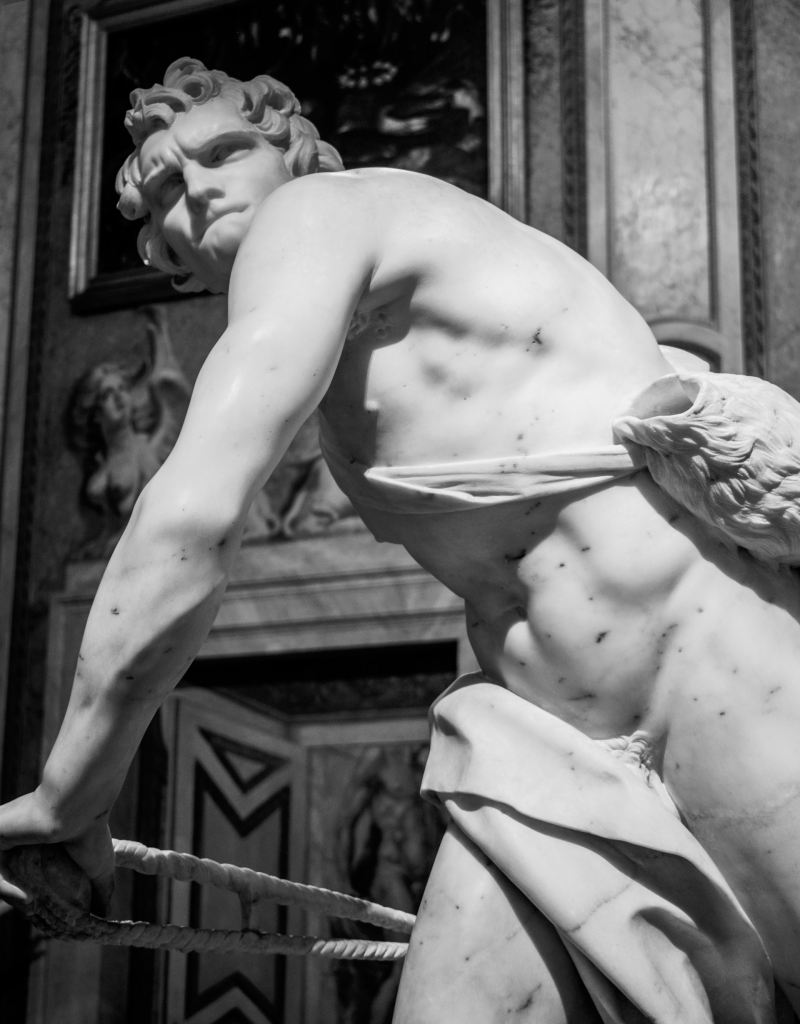
Photo by Boris Izmaylov on Unsplash

Currently, what was represented by the temple in Jerusalem on Mount Zion is represented by His body of believers, indwelt by His Holy Spirit.  Peter wrote that members of the church, “like living stones are being built up as a spiritual house, to be a holy priesthood, to offer spiritual sacrifices acceptable to God through Jesus Christ.”[1]  Therefore, do we participate in this Psalm by considering God’s strength through the church throughout history?  When we consider the “towers”, “ramparts”, and “citadels” of the church, do we consider the great “cloud of witnesses” listed in Hebrews 12, in addition to the faithful members of the church through the centuries since then?

Do we consider well not only the strength God has given His church through history, but also the strength that He protects it with even now?  Do we consider our own “ramparts” – the armor of God listed in Ephesians 6:13-17 –

Therefore take up the whole armor of God, that you may be able to withstand in the evil day, and having done all, to stand firm.  Stand therefore, having fastened on the belt of truth, and having put on the breastplate of righteousness, and, as shoes for your feet, having put on the readiness given by the gospel of peace.  In all circumstances take up the shield of faith, with which you can extinguish all the flaming darts of the evil one; and take the helmet of salvation, and the sword of the Spirit, which is the word of God.

Consideration takes time, so to participate in this Psalm take some time, if not today then soon, to consider God’s strength as shown through a person in the Bible, in church history, or even your own community or family.  Praise God for His strength and protection over His faithful!

As the “Sons of Korah” who wrote Psalm 48 believed, it’s worth the time and effort to:

Walk about Zion, go around her,
            number her towers,
consider well her ramparts,
            go through her citadels,
that you may tell the next generation
            that this is God,
our God forever and ever.
            He will guide us forever.

Many of this blog’s posts on History (click here) are a decent starting point.


[1] 1 Peter 2:5

Letting God Set the Agenda

One of the most significant ways the media influence us is by what’s called “agenda setting,” which means is that they tell us what is important and what we should care about by choosing what issues or topics to cover most often and most prominently.  For example, if a topic appears regularly on the front pages of newspapers or the covers of magazines or in the “Breaking News” of a TV news program, those editors have decided those items are more important, and want us to feel the same.  Unfortunately, there’s also an old saying in journalism that “if it bleeds, it leads,” meaning that bad news should get more coverage because it’s good for the business of journalism.

Related, but not the same, is “framing” which means the way the media covers something (the words they use, the sources they cite, etc.) affects our attitudes about it.  When the media consistently use words like “radical” or “extreme” to represent only the other side, or if they lump all the news that bleeds to a specific group of people and not another, they’re employing framing.

The problem is that the same issues aren’t always as important to all people, and often the media’s agendas don’t align with what should be each person’s agenda.  It’s like news coverage is designed to make us think the world is so evil that we can’t do anything about it, but also that very little is our own responsibility (or fault).  As Corrie ten Boom wrote about her time in a Nazi concentration camp: “this was the great ploy of Satan in that kingdom of his: to display such blatant evil that one could almost believe one’s own secret sins didn’t matter.”

Is it really good or healthy to feel all the world’s problems are on our shoulders? However, all media have to make choices about what to cover and how to cover it, so there is no avoiding these problems…unless you have another source for your agenda and the framing of it.  That source is God, and here are some verses from His word that can guide us:

Cast Your Anxieties
Humble yourselves, therefore, under the mighty hand of God so that at the proper time he may exalt you, casting all your anxieties on him, because he cares for you.” – 1 Peter 5:6-7

We can recognize that there is a sovereign God, and ultimately His agenda is the only one that matters.  With that knowledge, we know that there are many times where all we can do is pray to the One who sees all the bad news we do, and much more.  He is in control.

If It’s Worthy, It Leads
Finally, brothers, whatever is true, whatever is honorable, whatever is just, whatever is pure, whatever is lovely, whatever is commendable, if there is any excellence, if there is anything worthy of praise, think about these things.” – Philippians 4:8

We can recognize that good news isn’t always easy to find, but we should seek it out, even if it’s in our own homes, families, or neighborhoods.  There is always something worthy of praise to pay attention to.

Frame Your Responsibility Locally
For we are his workmanship, created in Christ Jesus for good works, which God prepared beforehand, that we should walk in them.” – Ephesians 2:10

Too much attention to the big picture problems of the world can distract us from the work God has put right in front of us, which we were created to do.  God wants us to be faithful, not to save the world (He has already done that!)

I agree with C.S. Lewis, who wrote: “I think each village was meant to feel pity for its own sick and poor whom it can help and I doubt if it is the duty of any private person to fix his mind on ills which he cannot help. This may even become an escape from the works of charity we really can do to those we know. God may call any one of us to respond to some far away problem or support those who have been so called. But we are finite and he will not call us everywhere or to support every worthy cause. And real needs are not far from us.”

Yes, global problems matter and there is always a lot of bad news, but today let God set your agenda and frame it through the lens of His eternal victory in Christ.

What are We Willing to Leave on the Cutting Room Floor?

From earliest times, debate has raged over whether God’s word can be taken literally.  Since the serpent asked, “Did God actually say, ‘You shall not eat of any tree in the garden’?[1] people have debated if the world was created in 6 days.  If Moses really parted the Red Sea.  If Jonah really spent 3 days inside a great fish.  And so on.  Talk about whether the Bible means what it says often focuses on the miraculous events within.

But what about verses like Ephesians 4:29?  “Let no corrupting talk come out of your mouths, but only such as is good for building up, as fits the occasion, that it may give grace to those who hear.”  When Paul wrote that, did he literally mean “no corrupting talk,” or just to aim for less crude language than the average person?  Did Paul mean each word needs to “fit the occasion,” or to repeat whatever catchphrase seems to work in most situations?  Did Paul mean everything we say should “give grace” to others, or is it ok if sometimes we want to look good or only appear gracious?  Do we need to always build up those who hear us?  Did Paul “actually say” what he wrote in Ephesians 4:29?

Failure to meet our ideals
does not mean that
we should change them.

We might reply that this is an impossible standard, but Jesus in Luke 18:19 said “Why do you call me good? No one is good except God alone.”  In that one statement, Jesus testifies that no one is good (everyone misses the mark), and also that He is God in the flesh, come to save us from failing to meet the standard.

So yes, Ephesians 4:29 should be taken literally, but we should also take literally that only Jesus can meet the standard, and that He did meet the standard.  Failure to meet our ideals does not mean they are the wrong ideals and that we should change them.  Holiness is holiness.

G.K. Chesterton wrote in his book Orthodoxy that “it does not matter (comparatively speaking) how often humanity fails to imitate its ideal; for then all its old failures are fruitful. But it does frightfully matter how often humanity changes its ideal; for then all its old failures are fruitless.”[2]

In film editing, “the cutting room floor” refers to pieces of physical film that (in pre-digital times) were cut out of the movie and left lying on the floor.  When writing this blog, one of the hardest things to do is to cut out parts or phrases I care deeply about, but sometimes it’s necessary, because my words aren’t always Ephesians 4:29 words.  Finding these failures can be fruitful if I learn from them and move closer to the ideal.  In real-time, daily conversation it’s even harder, but to take Ephesians 4:29 literally, we all have to figuratively ask:

What are we willing to leave on the cutting room floor today?


[1] Genesis 3:1
[2] Chesterton, G.K. Orthodoxy (1908).  P. 163.

Bible in a Year: Week of September 23 – 29

Fellow travelers:

Below are the chapters to read this week if you’re following along in my Bible in a year schedule, divided into morning and evening readings.  Follow along any way you want: you can just do the evening reading, flip the morning and evening, or read it all.  Whatever works for you and your schedule!  It doesn’t have to be Bible in a Year for everyone.

This week we finish Jeremiah and move to Ephesians.  Most of the rest of the morning readings this year will alternate between the minor prophets (and Ezekiel) and the rest of the New Testament.

Monday, September 23
Morning: Jeremiah 44-45
Evening: Job 21

Tuesday, September 24
Morning: Jeremiah 46-47
Evening: Job 22

Wednesday, September 25
Morning: Jeremiah 48-49
Evening: Job 23

Thursday, September 26
Morning: Jeremiah 50-52
Evening: Job 24

Friday, September 27
Morning: Ephesians 1-2
Evening: Job 25

Saturday, September 28
Morning: Ephesians 3-4
Evening: Job 26

Sunday, September 29
Morning: Ephesians 5-6
Evening: Job 27

Peacemaking Stones

In the Old Testament, King David wanted to build a temple for God, reasoning that people lived in houses, but God has only ever lived in a tabernacle (tent).  Why should people live in a nicer place than God?  However, David was not allowed to build the temple, but God said his son Solomon would build it.  David gives the reason in a speech to Israel from 1 Chronicles 28:2-3:

I had it in my heart to build a house of rest for the ark of the covenant of the LORD and for the footstool of our God, and I made preparations for building.  But God said to me, ‘You may not build a house for my name, for you are a man of war and have shed blood.’” (emphasis mine)

Since becoming king, David had to fight many of Israel’s neighbors in order to establish peace, which was accomplished by Solomon’s time as king.  But David was not idle regarding the temple; he made many preparations to make Solomon’s job easier when the time came.  After David’s death, Solomon, preparing for construction, worked with Hiram king of Tyre to secure lumber.  In his letter to Hiram, Solomon wrote:

You know that David my father could not build a house for the name of the LORD his God because of the warfare with which his enemies surrounded him, until the LORD put them under the soles of his feet.  But now the LORD my God has given me rest on every side. There is neither adversary nor misfortune.” – 1 Kings 5:3-4

God wanted His temple – His dwelling place – built under peaceful conditions, by a peaceful leader, not by a warrior.  Under Solomon’s leadership, God’s temple was completed.

Solomon’s temple is no more, but God is now building another temple – another dwelling place – His church.  How do we know this?  Peter wrote that Christians as “living stones are being built up as a spiritual house[1] and Paul that Christians “also are being built together into a dwelling place for God by the Spirit.[2]  God now spiritually lives in and among His people, not in a physical building.

What does David and Solomon’s experience teach us about the temple God is now building?  We know that Solomon’s temple had to be built by peaceful people, and Jesus said in the Sermon on the Mount, in Matthew 5:9, that:

Blessed are the peacemakers, for they shall be called sons of God.”

In the Greek language used in the New Testament, the word for peace comes from the verb “to join,” so peacemaking has to do with joining people together.  Between believers, this means that the more we live like Christ, the more we are able to join together in unity.  From believers to unbelievers, this “joining” means we offer them the love Christ gave us and hope and pray they will join with Him.  When discussing all issues non-essential to salvation, this means we seek to join and not separate, to promote peace instead of discord.

So, with God now building a temple of peacemakers, Paul urges us to be “eager to maintain the unity of the Spirit in the bond of peace.[3]  Pray that this Spirit can grow in each of us and in His people worldwide!

Blessed are the peacemakers, for they shall be called sons of God.”


[1] 1 Peter 2:5
[2] Ephesians 2:22
[3] Ephesians 4:3