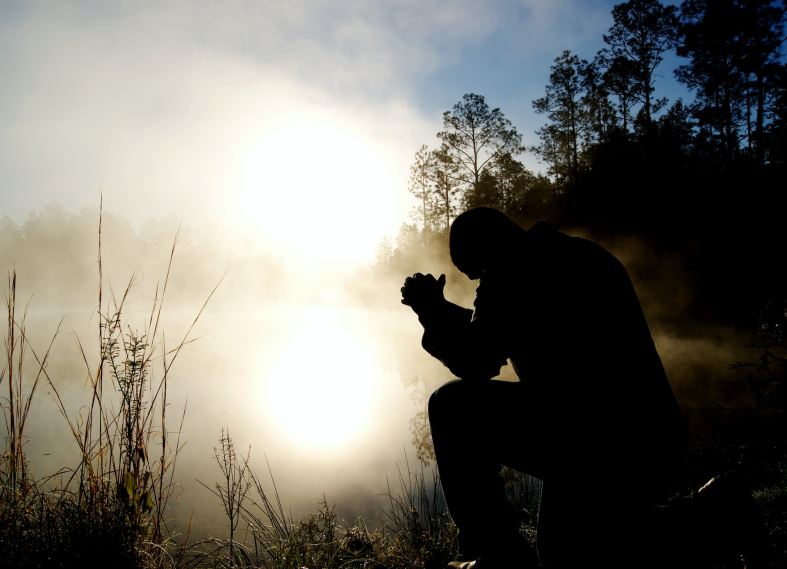
Going On to Maturity

The New Testament book of Hebrews is one of my favorite books of the Bible, laying out many truths about Jesus and their connections to Old Testament practices and images.  But the author doesn’t tell us about these things to satisfy our curiosity, but to help us grow closer to God.  To grow more mature in our faith.  Near the middle of the book, in Hebrews 6:1, the author wrote:

Therefore let us leave the elementary doctrine of Christ and go on to maturity, not laying again a foundation of repentance from dead works and of faith toward God

The writer is saying here that there is more to Christian maturity than “repentance from dead works and of faith toward God,” but that these things are the foundation of maturity.  As this verse begins with a “therefore,” we should ask what that word is there for.  At the end of Hebrews 5, the author had written about his audience needing to be taught “basic principles,” which he referred to as “milk.[1]  These believers need to move on to the “solid food” of mature believers, “those who have their powers of discernment trained by constant practice to distinguish good from evil.”[2]

But this does not mean we can abandon the “basic principles” of the Christian faith and leave them behind.  John Calvin wrote that, “in building a house we must never leave the foundation; and yet to be always engaged in laying it, would be ridiculous. For as the foundation is laid for the sake of what is built on it, he who is occupied in laying it and proceeds not to the superstruction, wearies himself with foolish and useless labor.”

It does mean that maturity takes “constant practice,” which takes time and commitment.  Time we could spend rebuilding the foundation again but instead should be spending training ourselves to “distinguish good from evil.” Sometimes we put too much effort into knowing about God, rather than into getting to know Him personally, in the relationship He intended.  Knowing God includes loving what He loves and hating what He hates, which doesn’t happen overnight, and doesn’t happen at all if we don’t focus on it appropriately.

I haven’t nearly fully developed my relationship with God.  I have a long way to go, and always will, but Christian sanctification works itself out in lifelong growth and it requires us to train our discernment over time.  A long time.

Therefore let us leave the elementary doctrine of Christ and go on to maturity

We’ll get there someday.  He guarantees that someday we will be fully mature!


[1] Hebrews 5:12
[2] Hebrews 5:14

A Just Reward

Over time, I’ve known Christians who at times, while sure of their faith and salvation, wonder what’s the point of serving God in this world?  Salvation comes through faith, not works, right?  What else is there to gain by Christian service, they ask?  Therefore, it becomes harder to serve.

Others might be diligently serving God, yet don’t see any results from their work.  In their eyes, it may not look like the ones they serve are benefitting.  It may not look like anyone is noticing their service and cares about it.  Maybe their motivation is getting harder to come by.

In situations like these, it helps to be reminded of the justice of God… Justice?  What does that have to do with it?  Let me explain.  Too often we think of God’s justice only in the sense that He cannot help but punish every evil act.  However, the epistle to the Hebrews reminds us that there is another side to God’s justice:

For God is not unjust so as to overlook your work and the love that you have shown for his name in serving the saints, as you still do.” – Hebrews 6:10

This verse tells us that it would be an injustice for God to not reward us for the good that we do.  Through the sacrifice of Christ, God no longer judges us for our sins, but nothing has happened to separate us from the other side of God’s justice!  While not punishing evil would be unjust, so would not rewarding good.

The verse also tells us that God doesn’t “overlook” anything that we do in love, “in serving the saints.”  While we may not see the fruit God is growing through us, or feel we are contributing, or receive recognition for our actions, God knows about it and is not unjust.  While He removes our sin from us “as far as the east is from the west,” (Psalm 103:12) He remembers every act of love we do, as small as sharing a cup of water with a thirsty child (Matthew 10:42).

Photo by Erik Mclean on Unsplash

The Bible isn’t clear about how each person will be rewarded differently in heaven, but it is clear that for everyone heaven will be amazing and wonderful beyond anything we could imagine, and also clear that not everyone will get the same level of reward.  See, for example, the parable of the talents in Matthew 25.

So, what’s the point of serving God in this world if it doesn’t affect our salvation, and if we aren’t seeing any current results?  Why bother?  The point is first, that it’s the right thing to do, but second, that God is just and will reward us in eternity.

As Jesus said in Matthew 6:19-21, “Do not lay up for yourselves treasures on earth, where moth and rust destroy and where thieves break in and steal, but lay up for yourselves treasures in heaven, where neither moth nor rust destroys and where thieves do not break in and steal.  For where your treasure is, there your heart will be also.

Our service on this earth for God is like an investment in the treasures of heaven, and these investments made in love are safer than any investments you can make in this world because the reward is based on God’s character, and God is just.

For God is not unjust so as to overlook your work and the love that you have shown for his name in serving the saints, as you still do.”

Strengthen What Remains

Does your church seem alive and vigorous in its faith?  Be thankful if it does because there are many churches that are struggling.  There are many churches that appear to be faithful, but their faith might only be skin-deep.

In Revelation chapters 2 and 3, John is given messages from Jesus to bring to seven churches in different cities: Ephesus, Smyrna, Pergamum, Thyatira, Sardis, Philadelphia, and Laodicea.  One of these – Sardis – fit the description above of a church where faith was only an appearance.  Jesus’ words to Sardis begins in Revelation 3:1-2:

And to the angel of the church in Sardis write: ‘The words of him who has the seven spirits of God and the seven stars.  ‘I know your works. You have the reputation of being alive, but you are dead. 2 Wake up, and strengthen what remains and is about to die, for I have not found your works complete in the sight of my God.

The church in Sardis looked good – it had “the reputation of being alive,” but in the sight of God who sees the internal and true reality, the church was “dead.”  Many churches today are like Sardis: they appear Christian but haven’t really embraced Christ.

However, there is still hope, because in verse 2 it says the work is not complete, and verse 4 says there remain some truly faithful in Sardis: “Yet you have still a few names in Sardis, people who have not soiled their garments, and they will walk with me in white, for they are worthy.”  Many people are in situations like this today: spiritually alive but in “dead” churches.

What message is given to those faithful few?  “Wake up, and strengthen what remains.” 

There are two parts to this instruction, the first being don’t give up.  Stay alert!  Some might be tempted to give up; to either to stop trying, or to leave and find another church.  Finding another church might be a good option in some cases, but for those who choose to stay, giving up on the church is not an option according to this message.  “Wake up.

The second part is to “strengthen what remains.”  There is work to be done in any church, even where little genuine faith remains.  Hebrews 10:24-25 advises us: “And let us consider how to stir up one another to love and good works, not neglecting to meet together, as is the habit of some, but encouraging one another, and all the more as you see the Day drawing near.”

Therefore, if you feel your church is dead, remain faithful and “strengthen what remains.”  Don’t give up but encourage others to “love and good works.”  By word and by example.  But if your church is spiritually alive, also remain faithful and strengthen what you have.

He who has an ear, let him hear what the Spirit says to the churches.” – Revelation 3:6

God is at Hand

The Old Testament prophet Jeremiah lived in a time full of false prophets, where the true word of God was rarely heard.  It was also a time where idolatry and sin ran wild among the people of Judah, Jeremiah’s audience, a nation headed for destruction by Babylon, God’s chosen agent to discipline them.  Yet the false prophets told the people: “You shall not see the sword, nor shall you have famine, but I will give you assured peace in this place.’[1]  Later, “They say continually to those who despise the word of the LORD, ‘It shall be well with you’; and to everyone who stubbornly follows his own heart, they say, ‘No disaster shall come upon you.’”[2]

These false prophets were essentially telling the people they can do whatever they want, so they don’t need a savior since God was not going to judge them.   The false prophets also said that the people don’t need God as Lord, since there would be no negative consequences no matter what they chose to do.

Jeremiah fearlessly confronts these prophets and worked hard to get the people to take him seriously.  At one point, God tells Jeremiah to proclaim: “Am I a God at hand, declares the LORD, and not a God far away?[3]  With this question, the LORD lets the people know that they can’t just set him aside as if He doesn’t exist.  While God is a God of love, He is also a God of justice, and sin will not be ignored.

Both the Old and New Testaments warn that those who ignore God can infect the broader population.  In Deuteronomy 29:18-19, Moses wrote: “Beware lest there be among you a man or woman or clan or tribe whose heart is turning away today from the LORD our God to go and serve the gods of those nations. Beware lest there be among you a root bearing poisonous and bitter fruit, one who, when he hears the words of this sworn covenant, blesses himself in his heart, saying, ‘I shall be safe, though I walk in the stubbornness of my heart.’ This will lead to the sweeping away of moist and dry alike.”  [emphasis mine]. The whole church, the “moist and dry alike” can suffer from the influence of members who cast God aside as irrelevant or inconvenient.  People who stubbornly insist on their own way.

The New Testament picks up the “root” image from Deuteronomy in Hebrews 12:15 – “See to it that no one fails to obtain the grace of God; that no “root of bitterness” springs up and causes trouble, and by it many become defiled”. This verse is in the context of God’s discipline, of understanding that when He judges His own people, it is not a final judgement, but one that is meant to refine them and make them holy.  But it is also a reminder that we need to accept God as Lord, by His grace, in order for Him to be our Savior.

Like the false prophets of Jeremiah’s day, modern preachers can also teach that we don’t need Jesus as Lord and Savior.  Some of them declare that we are free to do whatever we want because He is a God of love and therefore will never judge us no matter what.  These ministers fail to see God’s loving, disciplining hand in our difficulties, feeding the “root of bitterness”.

Other preachers declare that God is a God of love, and therefore if we follow Him, we will be showered with blessings.  These ministers see suffering not as discipline, but as a failure on our part to love God, thus making God’s love conditional.  This also feeds the “root of bitterness” because there is no way we can meet God’s standard.  We will always fall short and without grace all we can experience is frustration.  There will never be enough material blessing to keep us satisfied under this theology.

However, we do need Jesus as Savior, and we do need Jesus as Lord, and we also have Jesus as Savior and Lord.  We need to live like God is “at hand” and not “far away.”  R.C. Sproul used to say Christians need to live “coram Deo” which means “before the face of God” in Latin.  Always knowing that we live in God’s presence, that He is “at hand” reminds us not only of our need for Him as Lord and Savior, but also that He more than meets our need because He is a perfect Lord and Savior.

So, when Jeremiah tells us that God asks, “Am I a God at hand, declares the LORD, and not a God far away?” we can reply that we know we always live coram Deo because He is near.  Only then can we pull up bitterness by its roots and experience true joy in His presence.

Live coram Deo today.

Amen.


[1] Jeremiah 14:13b
[2] Jeremiah 23:17
[3] Jeremiah 23:23

Hope’s Anchor

Sometimes we fall into a pattern of trying to rely on our own merit to please God.  We try our hardest to do everything we think He wants us to do in order to earn His love.  We live like the classic hymn “Great is Thy Faithfulness” was changed to “Great is My Faithfulness.”  We put our hope in our own efforts to earn our salvation.

Hebrews 10:23, which says “Let us hold fast the confession of our hope without wavering, for he who promised is faithful” helps explain why we’d much rather have it be “Great is Thy Faithfulness.”  This verse reminds us that He is faithful and is worth putting our hope in.  In contrast we are often unfaithful and disappoint ourselves, falling short of the ideals we strive to achieve.  We can hold fast to our hope, because it’s based on His promises.

Earlier, Hebrews 6:19 says “We have this as a sure and steadfast anchor of the soul, a hope that enters into the inner place behind the curtain” where “this” refers to the promises of God that were fulfilled by the life of Jesus and give us access to God’s presence.  Counting on our own faithfulness is like being on a ship that attaches its anchor to itself, and the captain wonders why the ship keeps drifting uncontrollably.  So, as the verse says, we must attach our anchor to something else (God’s promises), because an anchor is only as good as what it’s attached to.  Something solid is needed, and God’s promises in Jesus are a solid, unchanging thing we can cling to at all times.

If we relied on our own faithfulness for salvation, every time we disappoint God, we would have to worry about losing our salvation, our place in God’s family.  We would have no security, no way to avoid “wavering.”  Our faithlessness discourages us, but His faithfulness gives us hope and strength.

God is faithful and worthy of our trust.  As the hymn declares about Him:

“There is no shadow of turning with Thee;
Thou changest not, Thy compassions, they fail not;
As Thou hast been Thou forever wilt be.”

We can “hold fast” to Him in all times and in all circumstances.  All of the Old Testament testifies to God’s faithfulness toward His people, and the New Testament testifies to the fulfillment of God’s promises in the life and work of Jesus.  Therefore, His faithfulness is backed up by centuries of history, and through His grace, He offers salvation to His people.  As Ephesians 2:8 says, “For by grace you have been saved through faith. And this is not your own doing; it is the gift of God”. Even our faith is a gift from God, based on His faithfulness, not ours, and given in His grace.  When our faith wavers, His does not.

Therefore, thank God that our hope is in His faithfulness, not in ours.  Our faithfulness is far too uncertain, but through the substitutionary sacrifice of Jesus we inherit Christ’s own merit in the eyes of God and couldn’t please Him anymore no matter what we do.

Let us hold fast the confession of our hope without wavering, for he who promised is faithful

“Great is Thy faithfulness, O God my Father”