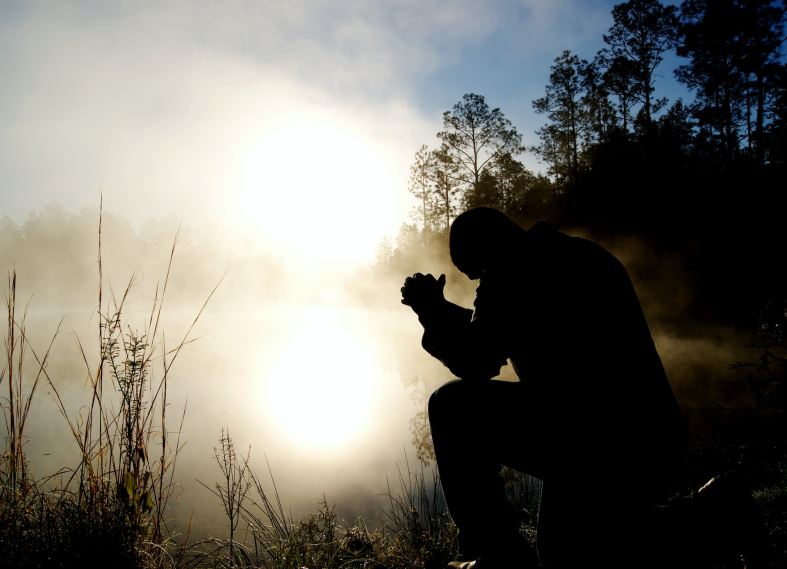
We Will Not Live in Tents Forever

The apostle Paul was likely one of the finest Old Testament scholars of his day, and sometimes draws on existing imagery to make a point.  One example might be Proverbs 14:11-12, where the second verse is more widely known than the first, but not unrelated:

The house of the wicked will be destroyed,
            but the tent of the upright will flourish.
There is a way that seems right to a man,
            but its end is the way to death.

Physically, it seems obvious that a house is far more durable than a tent, but both of these Proverbs tell us not to judge by appearances.  Looks and reputation may suggest otherwise, but it is righteousness that determines eternal destiny, specifically acceptance of Jesus’ righteousness.

In 2 Corinthians 5:1-3, Paul gives an example of why we should focus not on what “seems right”, but instead focus on the unseen things that matter for eternity, drawing on the tent image:

For we know that if the tent that is our earthly home is destroyed, we have a building from God, a house not made with hands, eternal in the heavens.  For in this tent we groan, longing to put on our heavenly dwelling, if indeed by putting it on we may not be found naked.”

Photo by Hendrik Morkel on Unsplash

Paul, defending his apostleship to the Corinthians amidst his suffering while other false apostles lived in ease, knew that an upright tent was better than a wicked house in God’s eyes, and therefore being less comfortable was entirely worth it, since there was an eternal reward waiting in heaven.

Commenting on 2 Corinthians 5, Warren Wiersbe notes that “Heaven was not simply a destination for Paul: it was a motivation.  Like the heroes of faith in Hebrews 11, he looked for the heavenly city and governed his life by eternal values.”[1]

When frustrated by your earthly limitations, or frustrated by discomfort in this world, know that we will not live in these tents forever.  For His faithful, God is preparing an eternal dwelling for us.  While it “seems right to a man” to think a house is better than a tent, every tent and house in this world is temporary.  Hebrews 1:12 says of all creation, the earth and all the heavens, that:

like a robe you will roll them up,
            like a garment they will be changed.
But you are the same,
            and your years will have no end.

Do we long for our new, eternal heavenly dwelling?  Does this longing motivate us to live for God?  Let us keep Driving Toward Morning today!


[1] Wiersbe, Warren.  Be Encouraged (2 Corinthians) (1994).  P. 69.

Christianity is Not in Decline. Ever.

The tomb is still empty!

Too much of what we hear and read in this world is filled with phrases like “post-Christian world,” or “Christianity’s decline.”  Or we could read that we’re “living in the ruins of Christendom.”  However, because Hebrews 11:1 says, “Now faith is the assurance of things hoped for, the conviction of things not seen,” our hope is not based on any ruin or decline we see in the communities and world around us.  While other things may end up in ruins or in decline, Christianity does not.  It was not in decline on Good Friday when Jesus died on the cross and it is not in decline now.

The best of the kingdom of God is always in the future, never in the past.  His kingdom is advancing daily.

Today, many will hear the good news of the kingdom of Jesus, and some may hear and be saved!  Also today, none will be snatched out of His hand! (See John 10:28)

Going On to Maturity

The New Testament book of Hebrews is one of my favorite books of the Bible, laying out many truths about Jesus and their connections to Old Testament practices and images.  But the author doesn’t tell us about these things to satisfy our curiosity, but to help us grow closer to God.  To grow more mature in our faith.  Near the middle of the book, in Hebrews 6:1, the author wrote:

Therefore let us leave the elementary doctrine of Christ and go on to maturity, not laying again a foundation of repentance from dead works and of faith toward God

The writer is saying here that there is more to Christian maturity than “repentance from dead works and of faith toward God,” but that these things are the foundation of maturity.  As this verse begins with a “therefore,” we should ask what that word is there for.  At the end of Hebrews 5, the author had written about his audience needing to be taught “basic principles,” which he referred to as “milk.[1]  These believers need to move on to the “solid food” of mature believers, “those who have their powers of discernment trained by constant practice to distinguish good from evil.”[2]

But this does not mean we can abandon the “basic principles” of the Christian faith and leave them behind.  John Calvin wrote that, “in building a house we must never leave the foundation; and yet to be always engaged in laying it, would be ridiculous. For as the foundation is laid for the sake of what is built on it, he who is occupied in laying it and proceeds not to the superstruction, wearies himself with foolish and useless labor.”

It does mean that maturity takes “constant practice,” which takes time and commitment.  Time we could spend rebuilding the foundation again but instead should be spending training ourselves to “distinguish good from evil.” Sometimes we put too much effort into knowing about God, rather than into getting to know Him personally, in the relationship He intended.  Knowing God includes loving what He loves and hating what He hates, which doesn’t happen overnight, and doesn’t happen at all if we don’t focus on it appropriately.

I haven’t nearly fully developed my relationship with God.  I have a long way to go, and always will, but Christian sanctification works itself out in lifelong growth and it requires us to train our discernment over time.  A long time.

Therefore let us leave the elementary doctrine of Christ and go on to maturity

We’ll get there someday.  He guarantees that someday we will be fully mature!


[1] Hebrews 5:12
[2] Hebrews 5:14

A Just Reward

Over time, I’ve known Christians who at times, while sure of their faith and salvation, wonder what’s the point of serving God in this world?  Salvation comes through faith, not works, right?  What else is there to gain by Christian service, they ask?  Therefore, it becomes harder to serve.

Others might be diligently serving God, yet don’t see any results from their work.  In their eyes, it may not look like the ones they serve are benefitting.  It may not look like anyone is noticing their service and cares about it.  Maybe their motivation is getting harder to come by.

In situations like these, it helps to be reminded of the justice of God… Justice?  What does that have to do with it?  Let me explain.  Too often we think of God’s justice only in the sense that He cannot help but punish every evil act.  However, the epistle to the Hebrews reminds us that there is another side to God’s justice:

For God is not unjust so as to overlook your work and the love that you have shown for his name in serving the saints, as you still do.” – Hebrews 6:10

This verse tells us that it would be an injustice for God to not reward us for the good that we do.  Through the sacrifice of Christ, God no longer judges us for our sins, but nothing has happened to separate us from the other side of God’s justice!  While not punishing evil would be unjust, so would not rewarding good.

The verse also tells us that God doesn’t “overlook” anything that we do in love, “in serving the saints.”  While we may not see the fruit God is growing through us, or feel we are contributing, or receive recognition for our actions, God knows about it and is not unjust.  While He removes our sin from us “as far as the east is from the west,” (Psalm 103:12) He remembers every act of love we do, as small as sharing a cup of water with a thirsty child (Matthew 10:42).

Photo by Erik Mclean on Unsplash

The Bible isn’t clear about how each person will be rewarded differently in heaven, but it is clear that for everyone heaven will be amazing and wonderful beyond anything we could imagine, and also clear that not everyone will get the same level of reward.  See, for example, the parable of the talents in Matthew 25.

So, what’s the point of serving God in this world if it doesn’t affect our salvation, and if we aren’t seeing any current results?  Why bother?  The point is first, that it’s the right thing to do, but second, that God is just and will reward us in eternity.

As Jesus said in Matthew 6:19-21, “Do not lay up for yourselves treasures on earth, where moth and rust destroy and where thieves break in and steal, but lay up for yourselves treasures in heaven, where neither moth nor rust destroys and where thieves do not break in and steal.  For where your treasure is, there your heart will be also.

Our service on this earth for God is like an investment in the treasures of heaven, and these investments made in love are safer than any investments you can make in this world because the reward is based on God’s character, and God is just.

For God is not unjust so as to overlook your work and the love that you have shown for his name in serving the saints, as you still do.”

Strengthen What Remains

Does your church seem alive and vigorous in its faith?  Be thankful if it does because there are many churches that are struggling.  There are many churches that appear to be faithful, but their faith might only be skin-deep.

In Revelation chapters 2 and 3, John is given messages from Jesus to bring to seven churches in different cities: Ephesus, Smyrna, Pergamum, Thyatira, Sardis, Philadelphia, and Laodicea.  One of these – Sardis – fit the description above of a church where faith was only an appearance.  Jesus’ words to Sardis begins in Revelation 3:1-2:

And to the angel of the church in Sardis write: ‘The words of him who has the seven spirits of God and the seven stars.  ‘I know your works. You have the reputation of being alive, but you are dead. 2 Wake up, and strengthen what remains and is about to die, for I have not found your works complete in the sight of my God.

The church in Sardis looked good – it had “the reputation of being alive,” but in the sight of God who sees the internal and true reality, the church was “dead.”  Many churches today are like Sardis: they appear Christian but haven’t really embraced Christ.

However, there is still hope, because in verse 2 it says the work is not complete, and verse 4 says there remain some truly faithful in Sardis: “Yet you have still a few names in Sardis, people who have not soiled their garments, and they will walk with me in white, for they are worthy.”  Many people are in situations like this today: spiritually alive but in “dead” churches.

What message is given to those faithful few?  “Wake up, and strengthen what remains.” 

There are two parts to this instruction, the first being don’t give up.  Stay alert!  Some might be tempted to give up; to either to stop trying, or to leave and find another church.  Finding another church might be a good option in some cases, but for those who choose to stay, giving up on the church is not an option according to this message.  “Wake up.

The second part is to “strengthen what remains.”  There is work to be done in any church, even where little genuine faith remains.  Hebrews 10:24-25 advises us: “And let us consider how to stir up one another to love and good works, not neglecting to meet together, as is the habit of some, but encouraging one another, and all the more as you see the Day drawing near.”

Therefore, if you feel your church is dead, remain faithful and “strengthen what remains.”  Don’t give up but encourage others to “love and good works.”  By word and by example.  But if your church is spiritually alive, also remain faithful and strengthen what you have.

He who has an ear, let him hear what the Spirit says to the churches.” – Revelation 3:6