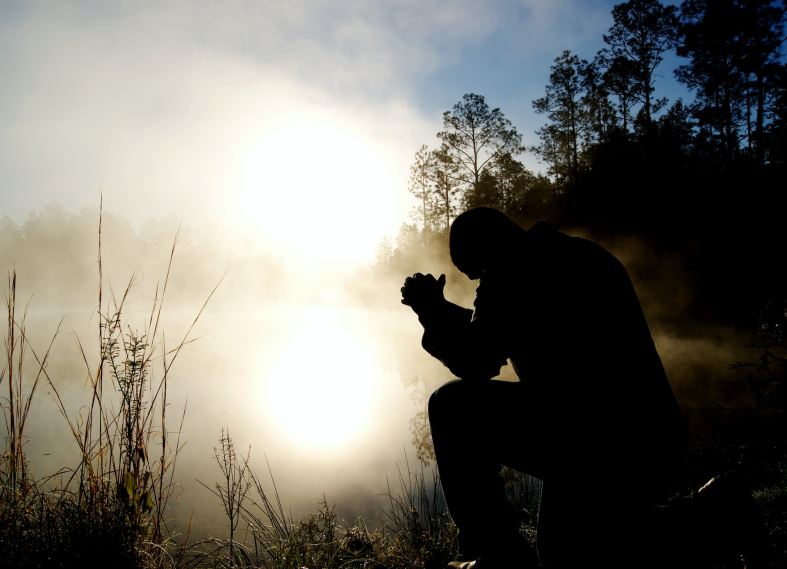
He Humbles and Exalts Nations

In a parable about humility, Jesus said in Luke 14:11: “For everyone who exalts himself will be humbled, and he who humbles himself will be exalted.”  While the parable is about individual people, elsewhere God also makes clear that he can humble or exalt entire nations.  While Luke 14:11 may contradict much of what we see in our world today, at the final judgment the truth of the verse will be made manifest, and God promises it will be so.

As an example, the Old Testament prophet Isaiah spoke of God’s power over the nations.  Around 605 B.C., Babylon invaded Judah and carried them into captivity, and about 70 years later, Judah was allowed to return home by Cyrus the Mede, who had defeated Babylon.  Over a century before Babylon’s invasion, Isaiah prophesied their entire rise and fall around 700 B.C., when Babylon was not yet even a world power.  Isaiah described the final destinies of both Babylon and of God’s people in startling images.

As recorded in Isaiah 47:1-3, God’s vengeance on Babylon was described, probably before they even considered capturing Jerusalem:

Come down and sit in the dust,
            O virgin daughter of Babylon;
sit on the ground without a throne,
            O daughter of the Chaldeans!
For you shall no more be called
            tender and delicate.
Take the millstones and grind flour,
            put off your veil,
strip off your robe, uncover your legs,
            pass through the rivers.
Your nakedness shall be uncovered,
            and your disgrace shall be seen.
I will take vengeance,
            and I will spare no one.
Our Redeemer—the LORD of hosts is his name—
            is the Holy One of Israel.

This is contrasted to the future of God’s people in Isaiah 52:1-2:

Awake, awake,
            put on your strength, O Zion;
put on your beautiful garments,
            O Jerusalem, the holy city;
for there shall no more come into you
            the uncircumcised and the unclean.
Shake yourself from the dust and arise;
            be seated, O Jerusalem;
loose the bonds from your neck,
            O captive daughter of Zion.”

Did you notice the parallels?  In Isaiah 47, Babylon is disgraced, cast down from the throne and made to do menial labor.  Babylon is stripped of their beautiful clothes and publicly shamed, sitting in the dust.

Contrast to Isaiah 52, which describes the daughter of Zion as rising up from the dust of disgrace under Babylon, from whom she has been freed.  She dwells in peace, awakening and dressing herself in beautiful clothes.  What a beautiful future!
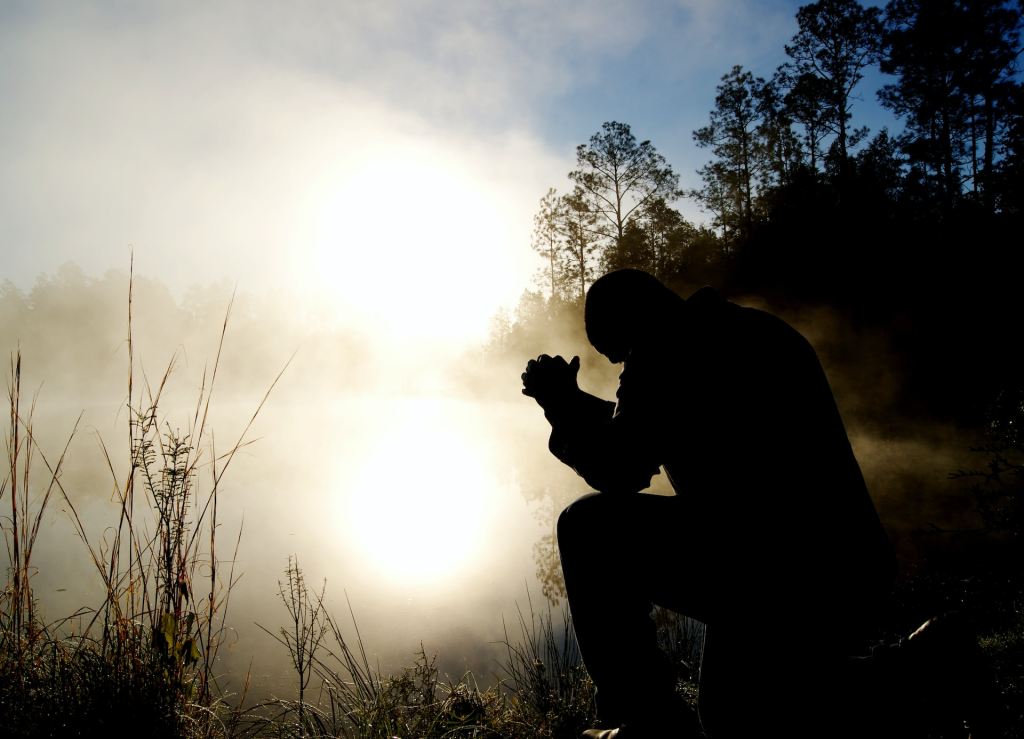
Photo by Aaron Burden on Unsplash

However, note that God removes Babylon’s temporary throne but does not put His people on a throne.  That honor belongs only to Him, and Babylon’s presumption in taking that place is the reason they need to be humbled.  By humbling themselves before God’s throne, His people follow the example Jesus gave at the wedding feast in verse 10 of the Luke 14 parable: “But when you are invited, go and sit in the lowest place, so that when your host comes he may say to you, ‘Friend, move up higher.’ Then you will be honored in the presence of all who sit at table with you.”  God will honor the humble.

By demonstrating power over entire nations in history, He has proven He has power over nations now and in the future.  And if He has power over nations, He has power over whatever frustrations we have with the state of the world.  He alone is on His throne.

So, if you are frustrated with the powerful and influential who puff themselves up in defiance of God, or if you wonder whether being humble is really a better alternative, remember:

For everyone who exalts himself will be humbled, and he who humbles himself will be exalted.”

For people as well as nations.

God Breaks Out of All Boxes

Written around 600 B.C., the Old Testament book of Habakkuk outlines a conversation between the prophet Habakkuk and God, in the few years prior to Judah’s exile in Babylon.  The book begins with Habakkuk’s complaint that evil was running rampant in Judah.  Habakkuk cries out to God about the prevalence of “violence” and “iniquity.”  He cries out about how people are ignoring God’s law, yet nothing is being done about it.  There was no justice.[1]  He’s tired of seeing nothing but evil in the world every day and is frustrated that God doesn’t seem to be doing anything about it.

Then comes Habakkuk 1:5, which to me is one of the most shocking verses in the Bible:

Look among the nations, and see;
            wonder and be astounded.

For I am doing a work in your days
            that you would not believe if told.”

Why is this verse shocking?  Because next, God tells Habakkuk that He has arranged for Babylon, a “dreaded and fearsome[2] nation that does not respect God and that lives by the creed that might makes right, to conquer Judah.  Basically, Habakkuk asks God why He was allowing evil to prosper in Judah, and God answers that He will allow an even more evil nation to prosper and conquer Judah.  Habakkuk must have been perplexed, and God knew it.  He knew Habakkuk would “wonder and be astounded” and we probably feel that way sometimes too.

Habakkuk had expectations about what God could and couldn’t do, but here God says He can, and will, do things that shock us.  Things that we cannot understand, but things that will teach us to trust instead of understand.  Sometimes God doesn’t behave in line with our theological doctrine, but He always does so for a reason.

Another example of shock at God’s out-of-the-box behavior comes from John 13, one of my favorite New Testament stories.  Mere days before going to the cross, “Jesus, knowing that the Father had given all things into his hands, and that he had come from God and was going back to God, rose from supper. He laid aside his outer garments, and taking a towel, tied it around his waist. Then he poured water into a basin and began to wash the disciples’ feet and to wipe them with the towel that was wrapped around him.”[3]

Photo by Photoholgic on Unsplash

Peter was shocked.  This was not what he expected from the Messiah, the incarnate Son of God.  So, when we get to verse 8, we read: “Peter said to [Jesus], “You shall never wash my feet.” Jesus answered him, “If I do not wash you, you have no share with me.”

Peter was reluctant to accept a God that would serve him by washing his feet, but what Jesus was trying to tell the disciples was that if they wanted to follow Him as their master, they would have to serve as He served, even if it wasn’t what they expected from God.  They needed to be washed, and then to wash others.

Peter was learning that if Jesus is doing something, don’t question it!  His actions are right by the mere fact that He is doing it, whatever our reason or expectations tell us.  In the Old Testament, God decided to send His people to a Promised Land, then to cause a heathen nation to kick them out of the Promised Land.  In the New Testament, He showed us that His Messiah would be a suffering servant, to teach us to be suffering servants.

God will never do anything that contradicts His character as revealed in the Bible, but the Bible also says, “Who has measured the Spirit of the LORD, or what man shows him his counsel?” in Isaiah 40:13.  God does not fit within our boxes, our expectations and rules.  We don’t fully understand Him.  Therefore, pay close attention to Jesus the Master, and be ready to follow where He goes, even though it might be shocking!

Look among the nations, and see;
            wonder and be astounded.

For I am doing a work in your days
            that you would not believe if told.”


[1] Habakkuk 1:2-4
[2] Habakkuk 1:7
[3] John 13:3-5

Jesus is the Best Fisherman

During His life on earth, Jesus called 12 men to special positions as His disciples or apostles.  Out of these 12, at least 4 and possibly 7, were fishermen, a common trade at that time.  The gospels have many fishing stories, including one in Luke 5 when Jesus is about to call His first disciples.

One morning after Simon Peter and some other fishermen had been working all night without catching anything, Jesus decided to preach from Simon’s boat to the crowd that was following Him.  After teaching, Jesus told Simon: “Put out into the deep and let down your nets for a catch.”[1]  Simon answered: “Master, we toiled all night and took nothing! But at your word I will let down the nets.”[2]

Simon ended up obeying, but not before objecting: “Master, we toiled all night and took nothing!”  Some questions may have gone through Simon’s mind: Did this travelling rabbi just tell me how to do my job?  Nighttime was the best time for fishing, and they caught nothing, so why did He tell them to try again?  Maybe Jesus, as a non-professional, didn’t know that?  Maybe he felt like “I’m the expert here!”

However, Jesus knew what He was doing because when they obeyed, “they enclosed a large number of fish, and their nets were breaking.”  There were so many fish that, they “filled both the boats, so that they began to sink.”[3]

One lesson of this story is that Jesus can perform miracles by controlling nature.  Another is that Jesus had an unlimited ability to help Simon and the others do their jobs!  And if Jesus was better than professional fisherman at fishing, what does that mean for other jobs?  Jesus always knows better than we do about any job!

So, whether you’ve had a productive day, or you feel like you’ve “toiled all night and took nothing” don’t hesitate to ask Jesus for career advice! As Simon (later known as Peter) wrote in his own letter, “Humble yourselves, therefore, under the mighty hand of God so that at the proper time he may exalt you, casting all your anxieties on him, because he cares for you.” – 1 Peter 5:6-7


[1] Luke 5:4b
[2] Luke 5:5
[3] Luke 5:6-7

Using Your Talent: A Quint of Quotes

Fellow travelers,

Here is another “Quint of Quotes,” or five somewhat related sayings, from my collection.  I hope you find them interesting and thought-provoking.  Enjoy!

Photo by Tom Bradley on Unsplash

“Use what talents you possess: the woods would be very silent if no birds sang there except those that sang best” – Henry Van Dyke

“We can do no great things, only small things with great love.” – Mother Teresa

“It is not your business to succeed, but to do right. When you have done so the rest lies with God.” – C. S. Lewis

“All God’s giants have been weak men, who did great things for God because they reckoned on His being with them.” – James Hudson Taylor, founder of the China Inland Mission

“No one can do everything, but everyone can do something” – Max Lucado

He Humbles and Exalts Nations

In a parable about humility, Jesus said in Luke 14:11: “For everyone who exalts himself will be humbled, and he who humbles himself will be exalted.”  While the parable is about individual people, elsewhere God also makes clear that he can humble or exalt entire nations.  While Luke 14:11 may contradict much of what we see in our world today, at the final judgment the truth of the verse will be made manifest, and God promises it will be so.

As an example, the Old Testament prophet Isaiah spoke of God’s power over the nations.  Around 605 B.C., Babylon invaded Judah and carried them into captivity, and about 70 years later, Judah was allowed to return home by Cyrus the Mede, who had defeated Babylon.  Over a century before Babylon’s invasion, Isaiah prophesied their entire rise and fall around 700 B.C., when Babylon was not yet even a world power.  Isaiah described the final destinies of both Babylon and of God’s people in startling images.

As recorded in Isaiah 47:1-3, God’s vengeance on Babylon was described, probably before they even considered capturing Jerusalem:

Come down and sit in the dust,
            O virgin daughter of Babylon;
sit on the ground without a throne,
            O daughter of the Chaldeans!
For you shall no more be called
            tender and delicate.
Take the millstones and grind flour,
            put off your veil,
strip off your robe, uncover your legs,
            pass through the rivers.
Your nakedness shall be uncovered,
            and your disgrace shall be seen.
I will take vengeance,
            and I will spare no one.
Our Redeemer—the LORD of hosts is his name—
            is the Holy One of Israel.

This is contrasted to the future of God’s people in Isaiah 52:1-2:

Awake, awake,
            put on your strength, O Zion;
put on your beautiful garments,
            O Jerusalem, the holy city;
for there shall no more come into you
            the uncircumcised and the unclean.
Shake yourself from the dust and arise;
            be seated, O Jerusalem;
loose the bonds from your neck,
            O captive daughter of Zion.”

Did you notice the parallels?  In Isaiah 47, Babylon is disgraced, cast down from the throne and made to do menial labor.  Babylon is stripped of their beautiful clothes and publicly shamed, sitting in the dust.

Contrast to Isaiah 52, which describes the daughter of Zion as rising up from the dust of disgrace under Babylon, from whom she has been freed.  She dwells in peace, awakening and dressing herself in beautiful clothes.  What a beautiful future!

Photo by Aaron Burden on Unsplash

However, note that God removes Babylon’s temporary throne but does not put His people on a throne.  That honor belongs only to Him, and Babylon’s presumption in taking that place is the reason they need to be humbled.  By humbling themselves before God’s throne, His people follow the example Jesus gave at the wedding feast in verse 10 of the Luke 14 parable: “But when you are invited, go and sit in the lowest place, so that when your host comes he may say to you, ‘Friend, move up higher.’ Then you will be honored in the presence of all who sit at table with you.”  God will honor the humble.

By demonstrating power over entire nations in history, He has proven He has power over nations now and in the future.  And if He has power over nations, He has power over whatever frustrations we have with the state of the world.  He alone is on His throne.

So, if you are frustrated with the powerful and influential who puff themselves up in defiance of God, or if you wonder whether being humble is really a better alternative, remember:

For everyone who exalts himself will be humbled, and he who humbles himself will be exalted.”

For people as well as nations.