Using Your Talent: A Quint of Quotes

Fellow travelers,

Here is another “Quint of Quotes,” or five somewhat related sayings, from my collection.  I hope you find them interesting and thought-provoking.  Enjoy!

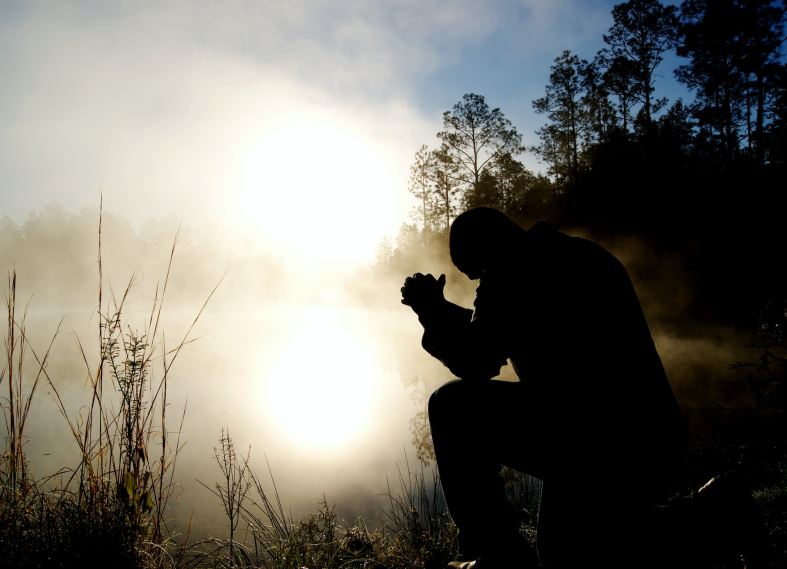
Photo by Tom Bradley on Unsplash

“Use what talents you possess: the woods would be very silent if no birds sang there except those that sang best” – Henry Van Dyke

“We can do no great things, only small things with great love.” – Mother Teresa

“It is not your business to succeed, but to do right. When you have done so the rest lies with God.” – C. S. Lewis

“All God’s giants have been weak men, who did great things for God because they reckoned on His being with them.” – James Hudson Taylor, founder of the China Inland Mission

“No one can do everything, but everyone can do something” – Max Lucado

Give Up Your Lists

Today is part 3 of a series on the first Beatitude from Matthew 5:3 – “Blessed are the poor in spirit, for theirs is the kingdom of heaven.”  Monday covered how the statement could make both the “proud” and the “ashamed” humble and be blessed by God.  Tuesday was about the rich young man who was fully set on earning his own salvation to see that it was impossible, all while Christ was right before him, loving him and offering him salvation by grace.

Today begins with Luke 18:10-14 –

Two men went up into the temple to pray, one a Pharisee and the other a tax collector.  The Pharisee, standing by himself, prayed thus: ‘God, I thank you that I am not like other men, extortioners, unjust, adulterers, or even like this tax collector.  I fast twice a week; I give tithes of all that I get.’  But the tax collector, standing far off, would not even lift up his eyes to heaven, but beat his breast, saying, ‘God, be merciful to me, a sinner!’  I tell you, this man went down to his house justified, rather than the other. For everyone who exalts himself will be humbled, but the one who humbles himself will be exalted.

Similar to Monday’s post, this passage is a rebuke to the proud, while comforting the ashamed, which is made clear at the end of these verses.  This passage also plays on stereotypes of the Pharisee as one who would have been perceived as religiously superior, versus the tax collector, who was under the ban, or that time period’s rabbinic version of excommunication[1].  At the end of the first sentence, the audience would have been expecting the Pharisee to pray well – after all, they were the “experts.”  But as an “expert” in the law, the Pharisee prays (and thinks) in terms of lists of good things and lists of bad things.  As a result, he is able to credit himself with all good things and the tax collector with all bad things because his lists aren’t complete.

The Pharisee manages this level of pride in spiritual accomplishment by narrowing down his list of sins to “things that other people do.”  He also excluded more subtle or internal manifestations of sin from his lists.  For example, at other times, Jesus said Pharisees “devour widow’s houses,”[2] which may have been a form of extortion.  Also, in his heart he may have been unjust and an adulterer just by making this prayer – judging the tax collector and misrepresenting God.  God’s justice on the tax collector was poured out on Jesus – who was this Pharisee to say who that justice applied to?  Also, in over-emphasizing the law, the Pharisee was “cheating” on God by idolizing the law as a way to salvation.

By narrowing the list of sins to “what others do,” and reducing those sins to the external evidence of them, rather than the heart level, this Pharisee blinded himself to his own need, and therefore missed the blessing of the Beatitude.  The only way to feel rich in spirit before God is to lower the standard, or to humbly accept Christ’s righteousness – the riches of His spirit – in place of your own.

In Psalm 51, King David wrote of his repentance after committing adultery with Bathsheba and having her husband Uriah killed in verses 16-17:

For you will not delight in sacrifice, or I would give it;
            you will not be pleased with a burnt offering.
The sacrifices of God are a broken spirit;
            a broken and contrite heart, O God, you will not despise.

This broken spirit and contrite heart recall the first Beatitude’s promise of blessing and the ability to follow God’s will, which David prayed for back in verse 12 of Psalm 51:

Restore to me the joy of your salvation,
            and uphold me with a willing spirit.

We can’t constantly compare our record of our sins with our record of the sins of others if we want to receive God’s blessing.  Our records are always incomplete and biased.  Doing so is only likely to destroy our ability to love those who God loves and to whom He offers His grace, including ourselves.  We are poor in spirit, but we only realize it when focusing on Him, and we only are blessed when we decide His standard and opinion are the ones that matter.  If we are Christians, the standard is Christ and through our adoption as children of God, He sees Christ’s righteousness when He gives His opinion of us.

Humbly knowing this, we can go to our house justified, and in eternity be exalted by Him, the only one we should compare ourselves to and the only one whose judgement matters.  For now, this humility enables us to love God and love others as we love ourselves.

To find joy, give up your lists of sins and replace them with Christ.

Blessed are the poor in spirit, for theirs is the kingdom of heaven.” – Matthew 5:3


[1] See an earlier post, Found! A Man in Need of an Ally, for an explanation of the ban as applied to tax collectors, and for Jesus’ striking decision to forgive Zacchaeus, a chief tax collector.
[2] Mark 12:40; Luke 20:47


Not a Matter of Degree

Today is part 2 of a series on the first Beatitude from Matthew 5:3 – “Blessed are the poor in spirit, for theirs is the kingdom of heaven.”  Today’s post highlights that seeing our spiritual condition as a matter of degree or magnitude, rather than as absolute spiritual poverty, keeps us from seeing, accepting, and experiencing Jesus as He is.

We’ll focus on this passage from Mark 10:17-22:

And as He was setting out on His journey, a man ran up and knelt before Him and asked Him, ‘Good Teacher, what must I do to inherit eternal life?’  And Jesus said to him, ‘Why do you call me good? No one is good except God alone.  You know the commandments: ‘Do not murder, Do not commit adultery, Do not steal, Do not bear false witness, Do not defraud, Honor your father and mother.’’  And he said to him, ‘Teacher, all these I have kept from my youth.’  And Jesus, looking at him, loved him, and said to him, ‘You lack one thing: go, sell all that you have and give to the poor, and you will have treasure in heaven; and come, follow me.’  Disheartened by the saying, he went away sorrowful, for he had great possessions.

Did Jesus tell this man that he only needed to do more, or to work harder, to earn eternal life?  Was this man rich in spirit, nearly blessed, and just shy of the kingdom of God?  The first Beatitude and yesterday’s post would suggest not, but how then does this story make sense?

A key to this is Jesus’ first response to the man, which questioned the man’s own premises, and revealed he was not “negotiating in good faith.”  After Jesus’ response, instead of saying “if only God is good, why am I chasing eternal life in my own work?” this man persisted in seeking to earn his way.  Jesus knew the man’s heart was set, and in a way was saying “you know the law, what do you need Me for?”  The man did not see Jesus for who He is – the One who offers Himself.

The man was looking for help on the way he had predetermined for himself; he was not looking for the Way that Jesus offered.  He wanted a God who helps those who help themselves, but that’s not who God is.  In the same way that Jesus does not want us to literally cut off a hand or foot, or gouge out an eye, to avoid sin (Mark 9:43-47), neither does He mean that selling all his goods will save this man.  He “went away sorrowful.”

Warren Wiersbe wrote: “Of all the people who ever came to the feet of Jesus, this man is the only one who went away worse than he came. And yet he had so much in his favor!”  But because he did not know he was poor in spirit, he left without either the kingdom of God or the blessing of Christ.

What exactly does Christ offer?  The infinite and perfect righteousness required for entering eternal life!  He is the only one who ever earned the title of Christian; everyone else gets it by His merit, by His grace, through faith.  99.9% righteous does not count because infinity is the target and insisting on working for that last 0.1% only keeps us from accepting the gift.  Also, if we think we are 67% righteousness, but doing better than someone we see as 66% righteousness, we misunderstand what righteousness is.  Conversely, if our 67% righteousness makes us miserable compared with someone else’s 75%, we misunderstand grace.  It’s not a matter of degree so much as a matter of type, “so that no one may boast.” (Ephesians 2:9)

Any time we ask, “what must I do to inherit eternal life”, we are thinking that what we have, plus some more, is the answer.  Sometimes we are not immediately rebuked but allowed to pursue our own way and eventually realize we’ve become lost.  Sometimes, like this man, we are gently rebuked but refuse to listen.

For the wages of sin is death, but the free gift of God is eternal life in Christ Jesus our Lord.” – Romans 6:23
Blessed are the poor in spirit, for theirs is the kingdom of heaven.” – Matthew 5:3

All this man needed to do was accept the work of Christ on his behalf, but he could not admit his poverty.  And it’s all we need to do.

Blessed are the Poor in Spirit

This week I’m reposting a series on the first of the Beatitudes, the series of statements at the beginning of Jesus’ Sermon on the Mount that each begin with “Blessed are…”   The first Beatitude is Matthew 5:3 – “Blessed are the poor in spirit, for theirs is the kingdom of heaven.”    Today’s angle on it is how the statement addresses different people’s needs in such a simple way with only a few words.  This was the opening of a speech to great crowds that had followed him, crowds with all sorts of people.

The Greek word for “poor” in the Beatitude is a word suggesting one who has been reduced to begging.  They have nothing of their own and are entirely dependent on others.  Some in the crowd, who I’ll call “proud” would have felt rebuked, thinking their own works made them blessed, and might have been shocked to be compared with a beggar.  Others in the crowd I’ll call “ashamed” of their own works would have been comforted that they are blessed since they didn’t feel they measured up to the achievements of the proud.  They knew they were poor, but not blessed.  The proud think they’re ok because of what they’ve accomplished; the ashamed think they aren’t ok because their accomplishments seem smaller.  The “proud” and “ashamed” were both in need of good news.

Note that I did not contrast “proud” with “humble”, because I don’t think these are opposites.  Instead, humility is contentedness in our proper place before God and others.  The “proud” become humble when Christ rebukes them so that they can experience His blessing.  The “ashamed” become humble when Christ reassures them of His love and acceptance so that they can experience His blessing.

Photo by Aaron Burden on Unsplash

The first beatitude reminds everyone listening to Jesus that acknowledging our spiritual poverty is the first step in a process, but also that being poor is not incurable.  Knowing we are poor in spirit may actually be desirable, but only when paired with knowledge of His provision.  The more we realize our need and beg Him for the solution, the more He can, and will, bless us.  The crowds coming to hear Him needed to hear this Beatitude first of all because if anyone refuses to be humble before Christ, the rest of His speech won’t matter.  The kingdom is not for them (at least not yet).

In Christ, we are blessed because He is infinitely rich in spirit.  However, sometimes our pride or our shame prevent us from knowing that we are blessed!  Then when we lack hope in that blessing, we miss our King’s will for us in His kingdom.  We can’t be good enough, and don’t have to be good enough, and we don’t have be better or worse than anyone else.

Today the Great Physician waits to cure you if you will come and be humbled by Him.  Seek His blessing and His will.

He Humbles and Exalts Nations

In a parable about humility, Jesus said in Luke 14:11: “For everyone who exalts himself will be humbled, and he who humbles himself will be exalted.”  While the parable is about individual people, elsewhere God also makes clear that he can humble or exalt entire nations.  While Luke 14:11 may contradict much of what we see in our world today, at the final judgment the truth of the verse will be made manifest, and God promises it will be so.

As an example, the Old Testament prophet Isaiah spoke of God’s power over the nations.  Around 605 B.C., Babylon invaded Judah and carried them into captivity, and about 70 years later, Judah was allowed to return home by Cyrus the Mede, who had defeated Babylon.  Over a century before Babylon’s invasion, Isaiah prophesied their entire rise and fall around 700 B.C., when Babylon was not yet even a world power.  Isaiah described the final destinies of both Babylon and of God’s people in startling images.

As recorded in Isaiah 47:1-3, God’s vengeance on Babylon was described, probably before they even considered capturing Jerusalem:

Come down and sit in the dust,
            O virgin daughter of Babylon;
sit on the ground without a throne,
            O daughter of the Chaldeans!
For you shall no more be called
            tender and delicate.
Take the millstones and grind flour,
            put off your veil,
strip off your robe, uncover your legs,
            pass through the rivers.
Your nakedness shall be uncovered,
            and your disgrace shall be seen.
I will take vengeance,
            and I will spare no one.
Our Redeemer—the LORD of hosts is his name—
            is the Holy One of Israel.

This is contrasted to the future of God’s people in Isaiah 52:1-2:

Awake, awake,
            put on your strength, O Zion;
put on your beautiful garments,
            O Jerusalem, the holy city;
for there shall no more come into you
            the uncircumcised and the unclean.
Shake yourself from the dust and arise;
            be seated, O Jerusalem;
loose the bonds from your neck,
            O captive daughter of Zion.”

Did you notice the parallels?  In Isaiah 47, Babylon is disgraced, cast down from the throne and made to do menial labor.  Babylon is stripped of their beautiful clothes and publicly shamed, sitting in the dust.

Contrast to Isaiah 52, which describes the daughter of Zion as rising up from the dust of disgrace under Babylon, from whom she has been freed.  She dwells in peace, awakening and dressing herself in beautiful clothes.  What a beautiful future!

Photo by Aaron Burden on Unsplash

However, note that God removes Babylon’s temporary throne but does not put His people on a throne.  That honor belongs only to Him, and Babylon’s presumption in taking that place is the reason they need to be humbled.  By humbling themselves before God’s throne, His people follow the example Jesus gave at the wedding feast in verse 10 of the Luke 14 parable: “But when you are invited, go and sit in the lowest place, so that when your host comes he may say to you, ‘Friend, move up higher.’ Then you will be honored in the presence of all who sit at table with you.”  God will honor the humble.

By demonstrating power over entire nations in history, He has proven He has power over nations now and in the future.  And if He has power over nations, He has power over whatever frustrations we have with the state of the world.  He alone is on His throne.

So, if you are frustrated with the powerful and influential who puff themselves up in defiance of God, or if you wonder whether being humble is really a better alternative, remember:

For everyone who exalts himself will be humbled, and he who humbles himself will be exalted.”

For people as well as nations.