Anyone who knows the story of the Exodus knows who the bad guy is: Pharaoh. As the leader of Egypt, he is primarily to blame for the enslavement of Israel. Eventually, through Moses and Aaron, God tells Pharaoh to free the Israelites from slavery, and time and again Pharaoh refuses. Clearly, Pharaoh is God’s enemy. However, in his resistance to God, I think Pharaoh fell into some habits any of us could fall into.
First, Pharaoh admitted his need for God only when things were going wrong but shut God out when things were going well. In Exodus 8:8, Pharaoh asked Moses to “Plead with the LORD to take away the frogs from me and from my people” but once the frogs were gone, Exodus 8:15 tells us that “when Pharaoh saw that there was a respite, he hardened his heart” and refused to do God’s will. The same thing happens in chapter 9, during the plague of the hail. Seeing the destruction caused by the hail, Pharaoh says “Plead with the LORD, for there has been enough of God’s thunder and hail” in verse 28, but in verse 34, “when Pharaoh saw that the rain and the hail and the thunder had ceased, he sinned yet again and hardened his heart.”
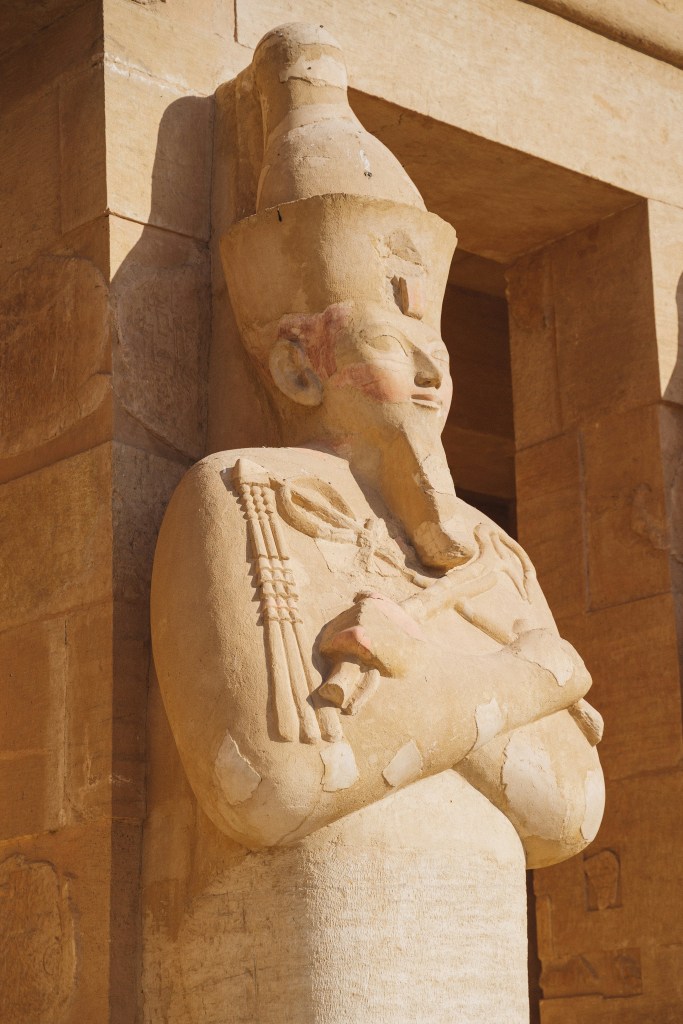
Next, Pharaoh repeatedly negotiated with God to define the scope of His influence. Faced with the plague of flies, Pharoah said to Moses and Aaron “Go, sacrifice to your God within the land.”[1] But staying “in the land” was not what God wanted His people to do. In response to the plague of locusts, Pharoah said “the men among you” could leave and worship God, but he wouldn’t let the “little ones”[2] go. Also, after the plague of darkness, Pharoah said “Go, serve the LORD; your little ones also may go with you; only let your flocks and your herds remain behind.”[3] In these 3 responses, Pharaoh insisted on limits to where the people should worship, which people should worship, and what they could (and couldn’t) use in worship.
Third, Pharaoh also tried to limit the scope of his own sin, and which sins he would be accountable to God for. In Exodus 9:27, Pharaoh said, “this time I have sinned” and in 10:17 said “forgive my sin, please, only this once.” In reality Pharaoh was sinning every time he refused to listen to God, but he wasn’t willing to admit that. He only admitted a minority of the times he disobeyed.
If you’re like me, this all might sound familiar. Often our prayers are more fervent and sincere when we need help than they are when we have something to praise God for, or when times are good. Often, we allow God to govern some parts of our life, but we keep other parts for ourselves, to do what we want with. Also, we often only admit some of our sins and choose which ones to care about. We’re all a bit like Pharaoh, the bad guy in the Exodus story.
Fortunately for us, we have something else in common with Pharaoh: the true, Almighty God will defeat all of the “gods” we follow. Every single one. Behind the battle between Moses and Pharaoh was a contest between our God and Pharaoh’s gods. As the Life Application Study Bible notes: “As each gloomy plague descended upon the land, the Egyptian people realized how powerless their own gods were to stop it. Hapi, the god of the Nile River, could not prevent the waters from turning to blood. Hathor, the crafty cow-goddess, was helpless as Egyptian livestock died in droves. Amon-Re, the sun-god and chief of the Egyptian gods, could not stop an eerie darkness from covering the land for three full days.”
When we choose not to obey God, we harden our hearts against Him and follow the “gods” we choose for ourselves, but God will ultimately defeat them all. God’s purpose in saving us is to deliver us from all other gods, as He delivered Israel from Egypt. He will deliver us from our slavery to every sin that binds us and make us not follow Him wholeheartedly.
We may be more like Pharaoh than we’d like to admit, but the Pharaoh in us has been killed, nailed to the cross with Jesus. When we reach heaven, all of our other “gods” will be gone and we will be perfected in our obedience to the one, true God, for our good and for His glory!
That’s a deliverance worth looking forward to and praising God for!
Amen.
 Driving Toward the Morning Sun
The correlation you’ve made between us and Pharaoh is so true it’s scary. Praise the Lord for His sacrifice! 🙂
LikeLiked by 2 people
Sin has a way of repeating, but His grace is more!
LikeLiked by 2 people
Blessings for sharing this informative discussion. Your chosen title for this post reminds each of us of our imperfect, sinful nature.
LikeLiked by 2 people
I’m glad you stopped by! This one was challenging to write and challenging to believe.
LikeLiked by 1 person