When Our Seeds Only Grow Thorns

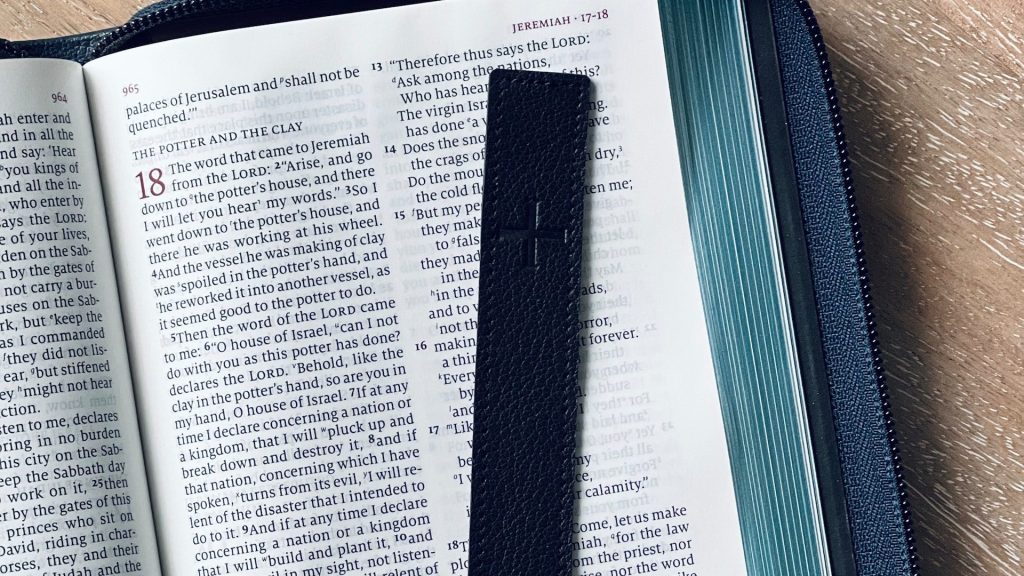
Sometimes we feel like we’re putting in a lot of effort but getting no results from it.  We’re sowing good seeds but not reaping any harvest.  At times, it seems disappointment is our only reward.  Often this can just be the way things are at the time – we’re doing nothing wrong but it’s just not obvious what God is doing at that time.  We don’t need to change anything.  But there may be times where we’re not reaping good things because we’re deceived that what we’re sowing is what we’re supposed to be sowing.

According to the prophet Jeremiah, the nation of Judah had this problem and as a result they ended up in exile.  In the first half of Jeremiah 12:13, the prophet says of Judah:

They have sown wheat and have reaped thorns;
            they have tired themselves out but profit nothing.

The nation of Judah thought they were sowing good seeds, but they weren’t and there are several examples in Jeremiah’s book.

First, Judah thought they were on the right side politically, with powerful friends and therefore secure.

The nation of Judah allied itself alternately with Egypt and Assyria, who they thought could protect them from Babylon.  Surely these powerful nations could keep Judah from doom at Babylon’s hands.  However, in Jeremiah 3:36 the prophet says:

How much you go about,
            changing your way!
You shall be put to shame by Egypt
            as you were put to shame by Assyria.

Because Judah had trusted these nations, other than God, for their salvation God would put them to shame by His own hand, from which there is no escape.  While there are many good ways to work with others, we should never trust anyone with the help that only God can provide.

Next, Judah thought they had the right cultural heritage.

The people of Judah wouldn’t listen to Jeremiah’s prophesies of doom for the nation because they thought God wouldn’t destroy what they saw as His own nation.  Israel had been taken into captivity by Assyria, but Judah thought it could never happen to them because they were the heirs of Jewish culture.  The people would repeat the phrase, “This is the temple of the LORD, the temple of the LORD, the temple of the LORD,” to remind themselves that they were special because they had the temple, but Jeremiah says in Jeremiah 7:4,

Do not trust in these deceptive words: ‘This is the temple of the LORD, the temple of the LORD, the temple of the LORD.’

The temple was provided as a way to approach God, but Judah thought of it like a magical talisman that would keep God happy so they could do their own thing.  However, God doesn’t want us to follow a checklist – He wants us.  All cultural and political institutions – including ones provided by God – are useless outside of God’s purpose for them.  What He provides He can take away if we abuse it.  When Judah was taken into captivity by Babylon, the temple was torn down and burned.

Last, Judah thought they had the right religion and were diligently practicing it

Judah’s religious leaders and people were diligent in observing the practices laid out in God’s ceremonial law.  They faithfully made the morning and evening sacrifices, observed the three main Jewish festivals, and followed many other ordinances, but in Jeremiah 7:22-23, the prophet said:

For in the day that I brought them out of the land of Egypt, I did not speak to your fathers or command them concerning burnt offerings and sacrifices.  But this command I gave them: ‘Obey my voice, and I will be your God, and you shall be my people. And walk in all the way that I command you, that it may be well with you.’

Because Judah was putting observance above obedience to God, He would therefore discipline them.  The sacrifices were not the objective – the relationship was the objective, but the people made their religion about the sacrifices themselves, not the relationship they were designed to restore.

Do we sometimes practice similar things in the modern church?  Of course we do.

The modern-day equivalent of Judah’s first mistake is when we expect from a political party what only God can give.  Our expectations of them become idolatrous, and we become more likely to compromise God’s principles to support them.  We commit the second mistake when we are convinced our denomination has it all right – the right history, traditions and doctrine – and therefore God will always favor us.  The last mistake happens when we put external religious observances ahead of internal devotion to God.  We may be executing the acts and rituals our religion requires of us, and our peers expect from us, but not giving ourselves fully to God.  We may go to church, but when we leave the church building we don’t take Jesus with us.

Sometimes we think through our political, cultural, and religious activities we should reap wheat, but what is happening when we keep reaping thorns?  Sometimes we need to check that we aren’t repeating Judah’s mistakes.

They have sown wheat and have reaped thorns;
            they have tired themselves out but profit nothing.
They shall be ashamed of their harvests
            because of the fierce anger of the LORD.

Praying for Our Leaders

King David was known as a man who sought God’s will in all things, even though he often failed.  The Psalms record many of his prayers for God to guide him and make him a good leader.  Psalm 26 is one of these prayers, and verses 8-10 include good objectives for any leader:

O LORD, I love the habitation of your house
            and the place where your glory dwells.
Do not sweep my soul away with sinners,
            nor my life with bloodthirsty men,
in whose hands are evil devices,
            and whose right hands are full of bribes.”

Sometimes we may not know how to pray “for kings and all who are in high positions,[1] as Paul suggests, but in this cry to God, David gives us at least 3 things to pray about.  He lists qualities he wanted to pursue, and some he wanted to avoid, but which are good for any leader.  Therefore, on the model of Psalm 26, we can pray for the leaders of our countries and communities today.

We can pray for political leaders who:

  • worship God (who “love the habitation of your house”)
  • do not seek violence and vengeance (who are not “bloodthirsty men”), and
  • are not corrupted by money (whose hands are not “full of bribes”)

All leaders can use our prayers today!


[1] 1 Timothy 2:2

Godly Habits for Leaders and Others

All the people benefit from leaders and rulers who fear God.  In Deuteronomy, when God reluctantly says Israel may set a king over them in the future[1], He also required the king to have specific habits to cultivate a fear of God in them:

And when he sits on the throne of his kingdom, he shall write for himself in a book a copy of this law, approved by the Levitical priests.  And it shall be with him, and he shall read in it all the days of his life, that he may learn to fear the LORD his God by keeping all the words of this law and these statutes, and doing them, that his heart may not be lifted up above his brothers, and that he may not turn aside from the commandment, either to the right hand or to the left, so that he may continue long in his kingdom, he and his children, in Israel.”  (Deuteronomy 17:18-20, emphasis mine)

These requirements have several parts.  First, the king was to “write for himself in a book a copy of this law.”  “This law” refers to what we now think of as the first five books of the Bible – all 187 chapters of it.  Imagine the time that would take, but this tedious exercise was designed to help the king internalize the message.  Quickly skimming over the Bible would not do.

Second, the king had to get this copy “approved by the Levitical priests,” to make sure nothing was added or left out, but also to remind the king that His authority is subject to God’s authority, as intermediated by the priests at that time.  Regardless of what laws the king might pass, God’s laws would always reign supreme and eternal.

Third, the king was to “read in it all the days of his life,” because it takes time and effort to dig the treasures of wisdom out of the Bible.  However, it is worth the effort because Psalm 19:10 tells us these truths are:

More to be desired are they than gold,
                        even much fine gold;
sweeter also than honey
                        and drippings of the honeycomb.

Also, the king would be surrounded by reminders of his worldly greatness every day, so constant meditation on the law would show him his reliance on God.  The king needs a constant reminder that he is under God, whose law applies to everyone.

These habits exist “that he may learn to fear the LORD,” which leads to “doing” the law.  Even the king is expected to do what God commands, not just tell others to.  With “doing” as the objective, the king will remain humble and learn the fear of God, because we may be able to know God’s word, but doing it is the real challenge and we can only succeed by His grace.

These habits also exist to make sure the king does not err “either to the right hand or to the left.”  This encouragement is later echoed in Moses’ words in Joshua 1:7-8, but what does it mean?  I think it means that without constant saturation in God’s word, we can fall into a trap of not following God’s positive will, but instead defining ourselves by what we’re against.  In trying to avoid one sin, we drift too far in the opposite direction and into another, equally destructive, sin.  Instead, positive obedience coming from the fear of God should be better than fine gold and “sweeter also than honey.”  Truth is often subtle and not as black-and-white as we’d like it to be.

Most of us aren’t kings, but we can apply the passage from Deuteronomy in our prayers.  1 Timothy 2:1-2 “First of all, then, I urge that supplications, prayers, intercessions, and thanksgivings be made for all people, for kings and all who are in high positions, that we may lead a peaceful and quiet life, godly and dignified in every way.”  But what shall we pray for them?  As Deuteronomy suggests, we should pray that they know God, fear God, and obey God, that they may be humble, and we may prosper.

Also, are you a leader?  Do you serve in a position of authority at your church, workplace, or other organization?  These habits will benefit you and those you serve anywhere.  (In societies where we can easily get a Bible, we don’t need to create our own copies of it, but we should seek to internalize as much of the Bible as possible, through memorization and other means.)  As Solomon wrote in Psalm 127:1 –

Unless the LORD builds the house,
            those who build it labor in vain.
Unless the LORD watches over the city,
            the watchman stays awake in vain.

If you’re not a leader, these habits are beneficial for you as well, as Psalm 128:1 says:

Blessed is everyone who fears the LORD,
                        who walks in his ways!

Amen.


[1] Deuteronomy 17:14-15

Perils of Politics: A Quint of Quotes

Fellow travelers,

Here is another “Quint of Quotes” from my collection.  Five quotes somewhat related to each other, but not exactly in agreement.  The book Faithful Presence by Bill Haslam opens by describing how polarized and angry America has become. In this environment, he asks the question: “do [Christians] just give up on the public square as a place to solve problems?”  These quotes aren’t an answer to that question, but I hope you find them interesting and thought-provoking.  Enjoy!

“Just because you do not take an interest in politics doesn’t mean politics won’t take an interest in you.” – Pericles, Greek statesman

“Only those will permit their patriotism to falsify history whose patriotism depends on history…A man who loves France for being military will palliate the army of 1870. But a man who loves France for being France will improve the army of 1870…The more transcendental is your patriotism, the more practical are your politics.” – G.K. Chesterton

“The less prudence with which others conduct their affairs, the greater the prudence with which we should conduct our own affairs” – Warren Buffett

The opening of the U.S. Constitution. Public Domain.

“I once carried on a brief correspondence with a man who objected to my interpretation of Romans 13. He said that all government was of the Devil and that Christians must not bow to the authority of ‘the powers that be.’ I pointed out to him that even his use of the United States mail service was an acceptance of governmental authority. The money he spent buying the paper and stamps also came from the ‘powers that be.’ For that matter, the very freedom he had to express himself was a right guaranteed by—the government!” – Warren Wiersbe

“When we are wrong, make us willing to change. And when we are right, make us easy to live with.” – Peter Marshal

God’s Word Withstands the Fire. Always.

The Old Testament prophet Jeremiah faced immense opposition, and in Jeremiah 36:20-25 is recorded an interesting story of King Jehoiakim’s attempts to destroy the prophet’s words, and by extension, God’s words.  The king was unable to get his hands on Jeremiah, whose allies helped him to hide, so the king takes a different approach:

So they went into the court to the king, having put the scroll in the chamber of Elishama the secretary, and they reported all the words to the king.  Then the king sent Jehudi to get the scroll, and he took it from the chamber of Elishama the secretary. And Jehudi read it to the king and all the officials who stood beside the king.  It was the ninth month, and the king was sitting in the winter house, and there was a fire burning in the fire pot before him.  As Jehudi read three or four columns, the king would cut them off with a knife and throw them into the fire in the fire pot, until the entire scroll was consumed in the fire that was in the fire pot.  Yet neither the king nor any of his servants who heard all these words was afraid, nor did they tear their garments.  Even when Elnathan and Delaiah and Gemariah urged the king not to burn the scroll, he would not listen to them.”

This wasn’t an impulsive, knee-jerk reaction to God’s word, but a deliberate, sustained act of rebellion.  This took time, and there’s almost a ceremony to it, as if daring God to stop him.  Many Christians today would be outraged if they witnessed something like this.  People in positions of authority disrespect God regularly, but imagine if the head of your country burned the Bible publicly on TV, and nobody stopped them, or even objected?  Sure, in modern times, people might object on their blog, on social media, or even on smaller TV and radio outlets, but in Jehoiakim’s example, nobody was able to challenge him. He “got away with it.”

Photo by raquel raclette on Unsplash

This brings up the question of: why does God allow things like this to happen?  I’ll suggest a question in response: Would it be a stronger testimony of God’s sovereignty if He had struck King Jehoiakim dead on the spot, or is it a stronger testimony that Jeremiah’s words still exist today all around the world?  If the second option is better, the next question is why do we sometimes feel such outrage and lash out (perhaps on our own blog or Facebook page) at such acts?  Do we trust God to deal with it, or do we worry that Jehoiakim is right – maybe God doesn’t care?

Part of the scroll Jehoiakim burned may have included these words of Jeremiah about the king himself: “With the burial of a donkey he shall be buried, dragged and dumped beyond the gates of Jerusalem.”[1] And “He shall have none to sit on the throne of David, and his dead body shall be cast out to the heat by day and the frost by night.[2]  Therefore God knew both that justice would be done to Jehoiakim, and also that his burning of the scroll had only symbolic and temporary effect.  In contrast, God’s justice and God’s word are eternally immutable and effective.  As Isaiah said: “The grass withers, the flower fades, but the word of our God will stand forever.”[3]

There’s also another question for us: if God had chosen in His sovereignty to redeem Jehoiakim, would we be angry like Jonah at the repentance of Nineveh[4], or would we praise God for His profound and measureless grace?  The same grace that brought Jeremiah’s words back from the futile fire pot of King Jehoiakim.  The grace that was purchased by Christ on the cross.

This word of God will stand as well: “Beloved, never avenge yourselves, but leave it to the wrath of God, for it is written, ‘Vengeance is mine, I will repay, says the Lord.’  To the contrary, ‘if your enemy is hungry, feed him; if he is thirsty, give him something to drink; for by so doing you will heap burning coals on his head.’  Do not be overcome by evil, but overcome evil with good.” – Romans 12:19-21

Do we believe it?


[1] Jeremiah 22:19
[2] Jeremiah 36:30
[3] Isaiah 40:8
[4] See my earlier, short post on Jonah’s anger.